
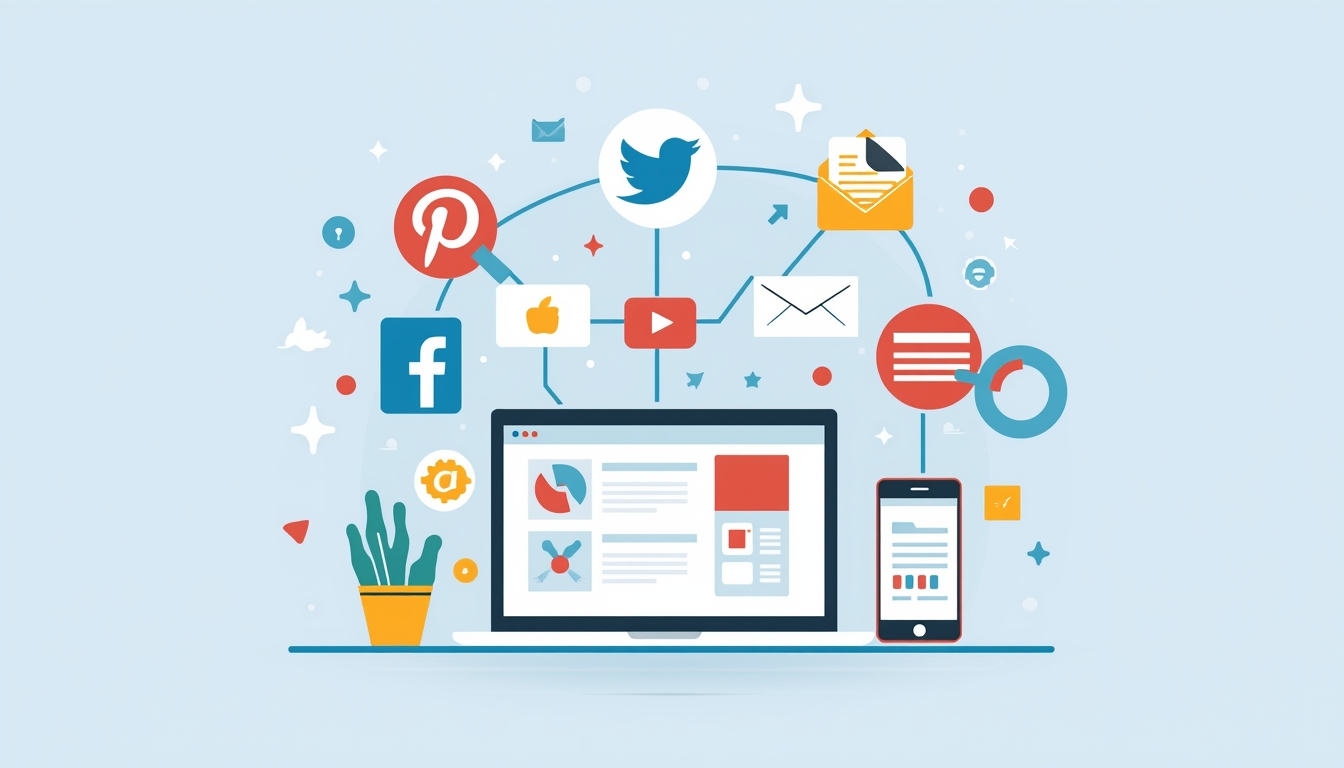
Have you ever thought of starting a digital marketing journey but got confused by all the options you come across? That is totally understandable. Indeed, digital marketing can open doors to amazing opportunities for businesses no matter their sizes. However, it can be quite intimidating getting started. Here is a step-wise guide that will equip you with all the necessary knowledge to embark on your digital marketing journey without any apprehension.
Within this detailed guide, you will come across the fundamental channels, tools, and strategies that enable digital marketing to yield results. The content is tailored to be helpful for a small business owner, a marketer in making, or an entrepreneur. All these three categories of the readers will get to know exactly what their first move in the digital realm needs to be.
Understanding Digital Marketing Fundamentals
Simply put, digital marketing refers to advertising products, services, or brands using digital platforms and technologies. It is in stark contrast to traditional marketing in the sense that it not only makes it possible for you to have the targeted audiences worldwide, but it also allows you to keep track of the results instantly.
Some of the key aspects of digital marketing are for starters, the topmost benefit that digital marketing offers to one’s is its flexibility. You do not have to go all in right away. Instead, you can begin on a small scale, experiment with different ways, and expand what brings you success. It doesn’t matter if you run a business locally in the USA or you have global aspirations, digital marketing will give you the power to.
Key Digital Marketing Channels
Knowing various digital marketing channels is essential to getting your brand recognized on the internet. Let’s look at some beginner-friendly, highly effective channels.
Social Media Marketing
You can communicate directly with the users who matter most to your business through social media platforms such as Facebook, Instagram, LinkedIn, and Twitter. You can do the following to get started:
- Create a business profile that reflects your brand.
- Regularly post engaging and shareable content.
- Interact with followers through comments and messages to build relationships.
- Utilize targeted advertising features to reach a wider or specific audience.
- Analyze performance insights to understand what is working and what is not.
Content Marketing
The phrase “Content is king” is still very relevant in digital marketing. Spend your energy on:
- Producing high-quality, original content that educates or entertains your audience.
- Using different content forms like blogs, videos, infographics, and podcasts.
- Sharing your content consistently on your owned and earned channels.
- Engaging with your audience both online and offline to create a community.
- Leveraging content for SEO by including relevant keywords and backlinks.
Email Marketing
When it comes to investment returns, email marketing is one of the most lucrative tools beginners can use:
- Building an email list organically and legally through website sign-ups, social media, and events.
- Segmenting your email list to send personalized campaigns to different groups.
- Designing visually appealing and mobile-friendly email templates.
- Testing subject lines, content, and sending times to optimize open and click rates.
- Using automation for welcome sequences, abandonment, and re-engagement campaigns.
Search Engine Optimization (SEO)
SEO is an instrument that makes your content accessible on the net without any extra cost:
- Understand your audience and choose keywords that best reflect their search intent.
- Create valuable content that provides a complete answer to the user’s query.
- Making sure your website is easy to navigate, fast, and mobile-friendly.
- Get high-quality backlinks from reputable and relevant websites.
- Use analytics and tools to track your SEO performance and make necessary adjustments.
Pay-Per-Click (PPC) Advertising
you can leverage PPC campaigns to play and analyze the different options available by:
- Identifying a small set of relevant keywords and creating specific ad groups for each.
- Setting a daily budget that aligns with your overall marketing spend and goals.
- Writing compelling ad copy that includes a clear call to action and value proposition.
- Using ad extensions to provide additional information and increase the ad’s real estate.
- Monitoring your campaign performance closely and making data-driven optimizations.
Essential Tools for Digital Marketing Beginners
By selecting the right tools, you can make your digital marketing process more efficient. Below is a list of essential tools for beginners that have been carefully chosen:
Must-Have Analytics Tools
- Google Analytics
- Hotjar
- Mixpanel
- Crazy Egg
- Tableau
Social Media Management Tools
- Hootsuite
- Buffer
- Sprout Social
- Later
- Canva
Email Marketing Platforms
- Mailchimp
- Sendinblue
- Constant Contact
- HubSpot
- GetResponse
Basic SEO Tools
- Google Search Console
- Ubersuggest
- Semrush
- Ahrefs
- Moz
Content Creation Tools
- Grammarly
- Canva
- Google Docs
- Hemingway Editor
- Adobe Spark
Don’t forget: Use these tools’ free versions first to familiarize yourself with them before you spend money on the premium features.
Building Your First Digital Marketing Strategy
Designing an efficient digital marketing strategy is not necessarily complicated. See below how to prepare your base.
Setting Clear Goals
Start with SMART objectives:
- Specific: Be exact about what you want to achieve and challenge yourself to create meaningful and impactful objectives e.g. increase the number of subscribers by 10%.
- Measurable: Make sure that you specify how you plan to measure results and overall success e.g. the number of email subscribers, the number of new customers etc.
- Achievable: Ensure that your goals are attainable and doable within the set time frame and resources e.g. to increase the number of subscribers and customers by 25%.
- Relevant: Make sure that your goals align with your overall business objectives and that they have significance in your industry, e.g. subscriber and customer base expansion.
- Timely: Commit to a certain time frame for your goals to be achieved, e.g. within 30 days of the implementation of the campaign.
Identifying Your Target Audience
Get a clear picture of your target market:
- Demographics: Age, gender, race, marital status, income, education, occupation etc.
- Geographics: Country, state, city, neighborhood, urban, suburban or rural, climate etc.
- Psychographics: Lifestyle, attitudes, values, interests, personality etc.
- Behavioral patterns: Purchase, usage, brand loyalty, user status, readiness to buy etc.
- Needs and Pain Points: Problems customers face and how your product or service can help solve them.
Selecting the Right Channels
Decide what channels to use:
- Your target audience’s preferences, behaviors and demographics
- Your marketing goals and the channels’ strengths
- The level of competition and saturation in the channels
- Your available budget and resources
- The ability to measure and optimize
Creating Your Content Plan
Coming up with a content plan that focuses on and is consistent with the needs of your audience and the goals of your brand:
- Define your content marketing goals clearly. e.g., increase website traffic or improve brand awareness.
- Identify your target audience and create buyer personas.
- Select the most effective content marketing channels for your audience.
- Decide on the types of content that suit your brand and audience.
- Develop a content calendar including publication dates and responsible persons.
Tracking Performance
Keep an eye on these main key indicators:
- Click-through-rate (CTR)
- Conversion rate
- Bounce rate (for websites)
- Customer acquisition cost
- Return on investment (ROI)
Common Beginner Mistakes to Avoid
Learn from these common digital marketing errors to save your time and money:
Giving It All a Try
A common mistake:
- spreading the focus across too many marketing channels
- overloading the internal resources of the company
- losing the ability to measure and improve performance effectively
Solution:
- Start with one or two channels.
- Grow the team or outsource as more work is created.
- Evaluate performance and optimize the channel before expanding.
Ignoring Data and Analytics
Signs of troubles:
- doing the same steps without measuring results
- adding more resources without analyzing the return on investment
- disregarding customer feedback and preferences
Better approach:
- Always collect data and study it.
- Be careful with resources, allocate them based on ROI.
- Take time to listen and analyze customer feedback, use this information to improve your product or service.
Inconsistent Branding
Issues:
- Confused customers and prospects
- Customer mistrust and lowered loyalty
- Weakened market position and ineffective differentiation
Fix by:
- Review all your basic brand elements.
- Set the rules and procedures for the brand usage.
- Train and remind your staff regularly and also help set the right tones and messages in all channels.
Neglecting Mobile Users
Errors:
- Sticking to desktop-only designs.
- Making the website content hard to read on small screens.
- Having long and complicated forms for signing up or ordering.
Solution:
- Make sure your site is mobile-friendly and responsive.
- Keep text and fonts large and legible on all devices.
- Shorten the process for your customers.
Expecting Instant Results
Reality check:
- Effective marketing campaigns take time, effort, and optimization before they deliver results
- Acceleration of sales growth is a gradual process
Better mindset:
- Give time to your marketing efforts.
- Set a plan on how to accelerate sales growth gradually and stay persistent with it.
- Balance short-term tactics with steady and robust long-term strategies.
Digital Marketing Budget Fundamentals
Effective budget allocation is key for beginners. Below you will find some ways of handling the money you spend initially on digital marketing activities:
Must-have expenditures:
- Professional website ($500-2000)
- Basic design tools ($0-50/month)
- Email marketing platform ($0-30/month)
- Content creation tools ($0-100/month)
- Analytics tools (mostly free to start)
Free vs Paid Alternatives
Begin with no-cost instruments:
- Social Media Profiles
- Open Source CMS (Content Management System)
- SEO (Search Engine Optimization) Tools with Demo or Free Versions
- Standard Gmail Account
- Google Analytics
Useful paid enhancements:
- Business Subscription on Social Media Platforms
- Premium SEO Apps and Services
- Professional Email Marketing Software
- Advanced Google Ads Account Features
- Content Creation and Graphic Design Software
Guide to Dividing the Resources
The proportions of the budget are advised to be as follows:
- 50% Content Creation
- 20% Social Media Advertising
- 15% Search Engine Optimization (SEO)
- 10% Email Marketing
- 5% Web Development and Maintenance
Ways of Saving Money
Intelligent tactics:
- Leveraging free digital marketing tools
- Improving organic SEO
- Networking and collaboration with influencers
- Reusing and repurposing existing content
- Using marketing automation
Always keep in mind: It is better to start with a small budget, find out what really works, then only scale successful tactics.
Getting Started: Your Action Plan
Let’s break down your digital marketing launch into actionable steps:
Week 1-2: Foundation Setup
1. Create your digital marketing strategy
- Define clear goals
- Identify target audience
- Choose primary channels
- Set initial budget
2. Essential Setup Tasks
- Build/optimize your website
- Set up Google Analytics
- Create business social profiles
- Install tracking tools
Week 3-4: Content Foundation
1. Content Planning
- Create content calendar
- Develop brand voice guidelines
- Plan first month’s content
- Set up content templates
2. Initial Content Creation
- Write 5-10 blog posts
- Create social media content bank
- Develop email templates
- Prepare basic marketing materials
Week 5-6: Launch and Monitor
1. Channel Activation
- Start social media posting
- Launch email newsletter
- Begin content publishing
- Set up first ad campaign
2. Tracking Systems
- Monitor key metrics
- Set up weekly reports
- Create performance dashboards
- Document what works
Next Steps for Growth
Join digital marketing communities
- Follow industry leaders
- Subscribe to trusted resources
- Consider certification courses
- Network with other beginners
Remember: Start small, stay consistent, and focus on quality over quantity.
Final Thoughts: Your Digital Marketing Journey Begins
The key to digital marketing success is consistently making strategic moves. When you are embarking on your journey, keep in mind these important takeaways:
Start Small, Think Big
Pilot your business ideas in a small and manageable segment of the market.
- Create a long-term plan and keep your business goals in mind.
- Develop small-scale, but scalable, marketing programs.
- Test, learn, and optimize your marketing efforts continually.
- Draw on your passions to build ideas that cross over to your market.
Quick Success Tips
Use compelling storytelling to communicate your brand and values.
- Share your entrepreneur story to make your brand relatable and trustworthy.
- Leverage partnerships and collaborations to extend your reach.
- Tie your efforts to your priorities to share your passion and influence.
- Continue to build confidence by measuring the results of your efforts.
Moving Forward
Your next immediate steps:
- Make a list of the people you want to meet and get to know.
- Identify the opportunities you want and would contribute to them.
- Reach out to the people on your list and ask for help creating connections.
- Use social media and other platforms to build your personal brand.
- Regularly review your progress and adjust your plan as needed.
Resources to Keep You Growing
- Commit to self-improvement by constantly learning and upgrading your skills.
- Develop a strong network through meaningful and mutually beneficial relationships.
- Stay flexible and adapt to changes in the market or industry.
- Practice patience and persistence, as success does not happen overnight.
- Celebrate small victories and recognize your growth regularly.
Don’t forget that every successful internet marketer was at the same point that you are now. Do what you can, don’t strive for the impossible, and take that step today to establish your online brand.
If you are willing to embark on your digital marketing journey, why not take the very first step from our action plan? Then, keep going from there. Your future in digital marketing starts
FAQ
What skills do I need to start digital marketing?
– Essential skills to begin:
– Basic writing and communication
– Simple graphic design (using tools like Canva)
– Data analysis fundamentals
– Social media familiarity
– Time management
You don’t need to be an expert in everything – focus on learning as you go.
How long does it take to see results?
Typical timelines:
– Social media engagement: 1-3 months
– SEO results: 3-6 months
– Email marketing: 1-2 months
– Content marketing: 3-6 months
– Paid advertising: 1-4 weeks
Results vary based on effort, industry, and competition.
Which digital marketing channel should I start with?
Best starting points:
– Local business: Google Business Profile + Local SEO
– E-commerce: Social media + Email marketing
– Service business: Content marketing + LinkedIn
– B2B: LinkedIn + Email marketing
Choose based on where your audience spends time.
What’s a realistic starting budget?
Minimum monthly investments:
– Small business: $500-1000
– Medium business: $1000-2500
– E-commerce: $1000-3000
Start small and reinvest based on results.
Which metrics matter most for beginners?
Key metrics to track:
– Website traffic
– Conversion rates
– Email list growth
– Engagement rates
– Return on ad spend (ROAS)
Focus on metrics that directly impact your goals.
